Category Archives: Organic

The Organic vs. Non-Organic Debate

There’s a hot topic right now: that study on Organic vs. Non-Organic foods. This meta-study out of Stanford University found that there is “no significant health benefit to organic food.”

Um, I don’t really think that was the issue, so don’t latch onto that.

The study also found that organic produce has a 30% lower risk of pesticide residue than conventional produce. Ah, there’s the issue.

Here are the facts:

Our soil is depleted across the board, so our produce is not nearly as nutrient dense as it used to be. And that same food is transported thousands of miles to our grocery stores, further losing its nutritional value because it is picked before it ripens, leaving it to ripen on the truck for two weeks. Vine-ripened tomatoes? Hardly. But “truck-ripened tomatoes” probably wouldn’t sell. So by the time it gets to your refrigerator, it’s pretty old stuff, and if you don’t get to it for a few more days, well, then it’s really old stuff.

So organic or conventional, that’s the state of affairs. And it sucks.

But the difference is that conventional produce has more pesticides and meat has antibiotics, hormones, and antibiotic-resistant bacteria. And all these chemicals are hormone disrupters. They’re linked to cancers. And they’re extremely harmful to developing children both in and out of the womb.

So that being said, if you are a mom-to-be or a woman contemplating pregnancy, it’s best to keep these chemicals out of your system, in order to keep it out of your growing child’s system. And if you’re already a mom, it’s best to feed your children cleaner food. Youngsters can’t process these toxins as well as adults can. And with cancer rates skyrocketing, I’d say adults aren’t processing the toxins very well, either.

And if your immune system is compromised for any reason, you don’t want those chemicals. A weakened system will be more vulnerable to these toxins.

And if you’re a person concerned about the health of the farm workers who are regularly exposed to these chemicals, you probably want to opt for organic, too.

Oh and if you’re a person who doesn’t want the makers of Agent Orange (Monsanto – also known as the wizards behind Genetically Modified Crap) spraying their magic juice on your food, then organic’s for you, too.

That’s what we do to our food. Does that look appetizing to you? Not to me.

So, in summary, the issue isn’t really the nutrition. It’s the chemicals.

Lastly, this study followed participants for two years or less. That’s hardly enough time to establish the long-term effects of pesticides on our health.

But common sense says that the fog in that picture doesn’t belong in our bodies. Why else would he be wearing a gas mask?

For more on this, you can read CNN’s articleNPR’s summary or Michael Pollan’s response to these findings.

13 Comments

Filed under Chemicals, Health, Organic

Cutting Corners

It’s best to eat whole foods, which are foods in their natural state. I’m talking about fruits, vegetables, nuts, legumes, meat, fish, eggs…foods like that. These are foods that have not been processed beyond recognition. These are foods with one ingredient, that come from nature.

But we all have a lot going on. Sometimes it’s just too much work to cook up a fresh meal every time. Am I right?

This is why so many people turn to packaged foods. They’re easy, ready-to-go, and last an eternity in your car or bag. Of course, that “lasting an eternity” thing is the problem – they’ve got all kinds of scary chemicals in there that allow them to do that. Don’t even get me started on what those chemicals are doing to your body…

I get that we only have 24 hours in the day. And if there’s too much prep involved, we’re less likely to eat that particular food. So here’s the healthy way I cut corners so that I eat the right foods:

1. Kale Salad

Buying local is best, and cutting your veggies on the spot is best, but with this pre-cut bag of organic kale, I’m getting kale that’s ready to go, along with carrots and cabbage. Saves me a lot of time in prep + 3 whole ingredients in one = Very Helpful.

2. Quick Oats

Sure, steel cut oats are best, but like many of you, I need to expedite my breakfast, so quick oats it is for me. Whole Foods 365 brand makes a great organic option that is ready to go in just a few minutes – cooking isn’t even necessary! Make cold or hot and let them sit for a couple of minutes to let them soak and you’re good to go.

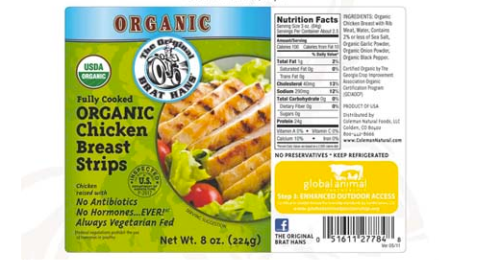
3. Coleman Naturals The Original Brat Hans Cooked Chicken Breast Strips

Now, I don’t know how many places are carrying this – could be a very new product – but I just found it at my local Whole Foods in Silicon Valley and it’s great. This is a package of pre-cooked organic chicken breast with a bit of salt, pepper, and onion and garlic powders. That’s it. No preservatives. Throw ’em on salads, sandwiches, or eat right out of the package. Easy. Tasty.

4. Eden Organics Canned Beans

Ideally, you want to buy dried (not canned) beans and soak them. It’s healthier because they’re fresher, cans have BPA, and the contents of cans typically contain a lot of additives. There are some exceptions, like Eden Organics. Their cans are bpa-free and there are no nasty ingredients. GMO-free since 1993, and one of the last independently owned organic companies, this is one company I’m happy to support.

For snack ideas (not exactly 1 ingredient whole foods, but healthy packaged options for on-the-go, quick refueling), check out some of my older posts:

Food Finds, Part 1 and Part 2
In a Pinch
“I Think There’s Something To This Whole Organic Thing…”

8 Comments

Filed under BPA, Chicken, GMO-free, Health, Organic, Product Review, Products, Snacks, Tips and Tricks, Vegetables

Sum-Sum-Summatime!

Ah, Summer. I love the summer. I mean, who doesn’t right? Nothing like the long, sunny days and happy people in vacation mode.

Well, this is the perfect time to talk about a hot topic that some of you might have heard a bit about. These days, it’s all about eating locally and seasonally.

The reason these are important is that your body is meant to eat the foods that grow in your climate at this particular moment. You are what you eat, so you should be eating the food that’s thriving where you are.

Also, there’s balance in the opposition. That’s why eating a juicy piece of fruit in the heat of summer feels so much better than a big, hot, heavy meal. And a belly warming stew feels just right in the dead of snowy winter.

Additionally, eating locally reduces pollution and costs associated with transporting foods…and that translates into cost savings for you and the satisfaction of knowing you’ve done your part to help the environment. And don’t forget about supporting local farmers rather than Big Ag – we need to take a stand against a system that cares more about money than the health of this nation. Check, check, and check!

The first time I experienced the “aha moment” of eating seasonally was this year…when the organic apples ran out at Whole Foods. My snack of an apple and peanut butter had been the culinary highlight of my day for months (I’m so wild and crazy like that) so I was really bummed at first, but what I realized was that I didn’t actually want it anymore – once I broke out of my routine, my taste buds were totally fine! An apple in July? No thank you!

Without my daily Fuji, I was left to explore the summer fruit, and I have to say, I’ve been having a blast with it.

I always love exploring new foods, but I’ve also had the desire for some old familiars that I don’t normally buy.

Last week at Whole Foods: raspberries and red grapes are my usuals, but I threw a couple of plums into the mix.

Farmer’s Market: nectarines. Craving nectarines.

This week at Whole Foods: apricots, red grapes (they were so crazy delicious last week that they went quickly), and strawberries (which are totally blowing my mind right now). I don’t remember the last time I bought strawberries. And I cannot stop eating them.

So I encourage you all to explore in season produce. See what you can add to your plate that you haven’t had in awhile…or maybe even ever!

Parent Tip: For all you folks with youngsters, this can be a great way to explore new foods with your little ones. Take them to a farmer’s market or just to the produce section of the grocery and show them all the wonderful, brightly colored fruits and veggies. Encourage them to help you shop – learning about produce and being involved in the decision-making will be fun for them and will help establish better eating habits for life.

As always, I do encourage you to choose organic, at least for the produce on the dirty dozen list. Check it out here if you need a refresher.

Check out this site for info on what’s in season in your area. It’s a great resource!

And lastly, in case you didn’t notice, I now have a fabulous badge on my site. My blog was named one of The Top 100 Health Coach Blogs 2012 by The Institute for the Psychology of Eating. Needless to say, I’m thrilled to be recognized. Gotta give a huge thanks to all my loyal readers and to everyone who has been super supportive, especially since the news broke and the badge went up!

Now for the Question of the Day…
What quintessential summer moment stands out for you this year?

1 Comment

Filed under Fruit, Health, Organic, Tips and Tricks, Vegetables

It Was A Shock…It was a Chocolat

That’s right. This post is about chocolate. How fun is that?!

I’m all about health, but I’m all about chocolate, too!

But I should specify – I love quality chocolate. I don’t like weird filler ingredients. I don’t like soy lecithin and emulsifiers. I don’t like artificial this, that, or the other thing. Oh, you know this about me by now. No need to repeat myself. 😉

So that means I like pricey, fancypants chocolate, but we all have our guilty pleasures, right? Craft chocolate is totally having a moment right now, just like beer and coffee. And I am all for taking advantage of it!

What do I look for in my chocolate? Only two ingredients and a whole lotta taste.

Ingredients: cacao and sugar.

Okay, you know I don’t think sugar is so great, but this is my one exception because dark chocolate – when 70% or higher – has antioxidants and deliciousness, and helps to curb hunger. And just a little bit goes a long way. We gotta treat ourselves sometimes, you know?

Alright, here we go. My favorite gourmet chocolate finds (click on the link to buy):

1. Dandelion – Venezuela and Colombia (both 70%)
Columbia has notes of caramel. Venezuela has notes of cinnamon and fruit.

2. Rogue Chocolatier – 70% Rio Caribe
Notes of coffee, blood orange, nuts.

3. Askinosie – I love the 77% from Davao, Philippines
This one contains a 3rd ingredient – cocoa butter. That’s just fine.

4. Mast Brothers – 72% with cacao nibs (which is technically a 3rd ingredient, but doesn’t really count because they’re pure, unsweetened cacao pieces)

5. Ritual – 75% from Costa Rica
I’m not joking when I tell you this tastes like blackberry jam.

The grocery store selection can be good, too, but they typically have more than just two ingredients.

Here’s what I look for:
*soy-free
*organic
*gmo-free
*high cocoa content

I know I’m not going to get all of these from every chocolate bar, but there are a few that come very close. And here they are:

1. Dagoba – 74% Chocodrops
This one does contain soy but it’s organic and gmo-free soy. They make bars, too, but I like the drops because you can just pop a few…or a handful…you know how it is…

2. Fearless – 70% Organic, Direct Trade
They have a few different flavors. All are good, but this is made with raw cacao and tastes a little different. It’s super healthy because preparing it at a low temperature preserves the antioxidant content, but the taste might not be for everybody.

3. Alter Eco – Gmo-free. Organic. Vegan. Soy and gluten-free. Fair trade.
I especially like the quinoa flavor even though the chocolate isn’t as dark.

4. Snake and Butterfly – Fair trade, organic, and milk, soy, and gluten-free.

Things to keep in mind when it comes to chocolate:

  • Chocolate processed WITH alkali is not as healthy because the alkali strips out most of the antioxidants and flavonoids.
  • The higher the cocoa content, the lower the content of sugar, and that’s a good thing. We want higher cocoa content. So that 85% dark chocolate bar? It has more cocoa and less sugar than that 47% bar. And more antioxidants.
  • For the most antioxidants, eat raw cacao (this is where chocolate comes from but when we heat it at high temps and add in sugar, etc., it loses it’s nutritional punch). It’s delicious in smoothies, chia pudding, oatmeal, in a mix with walnuts and goji berries, in greek yogurt…the possibilities are endless. In fact, raw cacao is a superfood – and it’s the food with the highest antioxidant content on the planet. Yes, you read that correctly. Raw cacao has more antioxidants than blueberries – by a lot. And when eaten with berries, the antioxidant effect multiplies. Pretty amazing, right?  Chocolate is awesome.
  • 1 oz is the recommended daily dose (about the size of a dental floss container) because as we all know, chocolate has fat and sugar and most of us are getting plenty of those from other sources, too. 😉
  • Organic and raw is always a better choice when it comes to chocolate
  • Don’t choose a chocolate…or anything, really…with a long list of ingredients

So there you have it. Go grab my grocery faves or indulge in one of my high-end finds. Either way, it’ll be tasty!

5 Comments

Filed under Chocolate, Gluten-free, GMO-free, Health, Organic, Product Review, Products, Raw, Sugar, Superfoods, Vegan

Be Wary of Dairy

Ah, dairy. This subject is hairy.

And you’ll probably want to be a bit chary.

Okay, no more rhyming.

So basically, there’s been a lot of debate over whether or not we need dairy. It’s a great question. Here’s what the argument for it looks like:

1. “I love cheese!”

2. “I love ice cream!”

3. “I can tolerate it just fine.”

Okay, fair enough. Not terribly scientific, but I agree on points 1, 2, and 3!

Now let’s take a look at what the argument AGAINST dairy looks like:

1. A whole lot of people can’t tolerate it just fine

Whole populations around the world and quite a large number of people in this country are lactose intolerant. What does it say that so many of us are unable to eat dairy? Maybe it means we don’t need it.

2. Milk is a baby’s food

We don’t even drink our own milk past early childhood. Milk contains carbohydrates, fat, and protein all in one so that babies get the three essential macronutrients from their one food source. Milk makes babies grow. But we’re all grown up. So again, maybe we don’t need it.

3. We are the only species that drinks the milk of another animal

A lot of anti-dairy people say, “We don’t drink our own milk, so why are we drinking the milk that’s meant for baby cows?”

Kinda makes you stop and think, right?

3. Milk isn’t a calcium solution

Wait, what?! Yeah. We have a higher consumption of dairy in this country than in most countries around the world. And we also have the highest rate of osteoporosis. That doesn’t add up. Isn’t dairy supposed to protect us from osteoporosis because it gives us calcium to build strong and healthy bones? Seems people in other countries where dairy consumption is very low, are not only finding enough calcium from other sources, they’re not experiencing bone loss the way we are.

I believe the way we’re eating in this country is stripping our bones of calcium…among other things…but we’re not going into that right now. The main point here is that dairy isn’t making up for it. Yet again, I ask, “Do we really need it?”

Some great non-dairy sources of calcium?
Broccoli, kale, bok choy, collard greens, rhubarb, chia seeds, flax seeds, coconut milk, blackstrap molasses, tahini, pistachios, almonds/almond butter, and sardines. I’m sure you can find at least ONE thing on that list that sounds good.

4. Milk consumption can contribute to disease

This is where dairy gets really scary (sorry! that’s the last rhyme!). Milk contains a lot of hormones that aren’t so good for us. You’ve heard of rBST or rBGH, right? It’s the genetically engineered growth hormone (made by Monsanto – need I say more?) they give to cows to stimulate milk production. This is in conventional dairy and has been linked to various types of cancer.

But even organic rBST-free/ rBGH-free dairy has hormones because cows are milked all the time, which means they are milked when pregnant, and some hormones are sky-high during pregnancy. Then all of the milk from all of the cows is pooled together and we consume a whole mix of crazy stuff…stuff coming from a lot of hormonal females…think about it…

All of these hormones look to be contributing to certain types cancer. Prostate cancer is related to higher consumption of dairy products, as is ovarian cancer, although the link is less clear than with prostate. Endometrial cancer is a hormone-related cancer, so there’s concern for dairy hormones there, too.

5. Low-fat and fat-free dairy is linked to acne

Who wants bad skin? ‘Nuff said.

So do I need to take supplements?

Actually, high calcium supplementation has been shown to be related to a higher risk of heart attacks and kidney stones, as well as a higher risk of hip fractures. Basically, the calcium from supplements is different from calcium you consume in foods – it’s a big hit of the mineral at once, instead of a gradual dose throughout the day with various meals and snacks. Calcium also needs to be taken in tandem with magnesium and vitamin D, so just taking a calcium supplement without these will not facilitate absorption. And calcium that doesn’t get absorbed floats around and ends up where it shouldn’t be, causing heart disease, among other health problems. Not good.

My recommendation is to really try to get most of your calcium from your food and proceed with caution with supplements. Take small amounts at a time, if you need to, and always take it with magnesium and vitamin D.

I’ve found the evidence against dairy pretty compelling. But of course, the Dairy Industry makes sure our government recommends it as an essential part of a healthy diet. Food remains the best way to get calcium, but it doesn’t have to be dairy. If you want to eliminate it completely, or almost completely, that’s great. If not, limit your intake to 1-2 servings per day. Moderation is the key here.

2 Comments

Filed under Dairy, Diet, Health, Organic